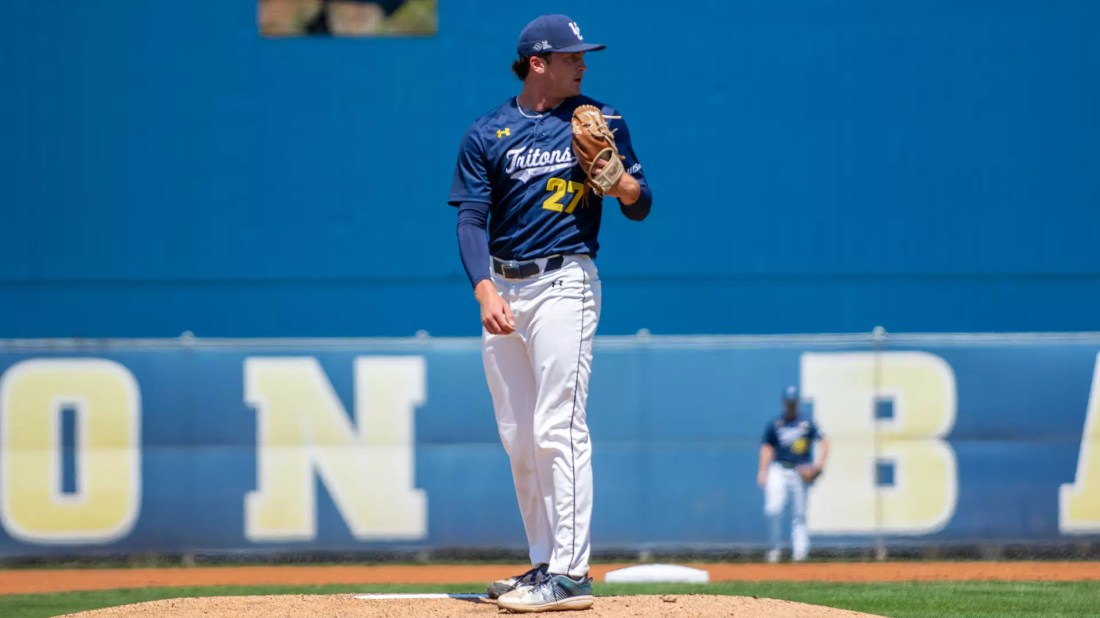
Week 5 Evaluator’s Notebook: UC Irvine @ UCLA and Cal State Fullerton, Hawai’i @ Long Beach State

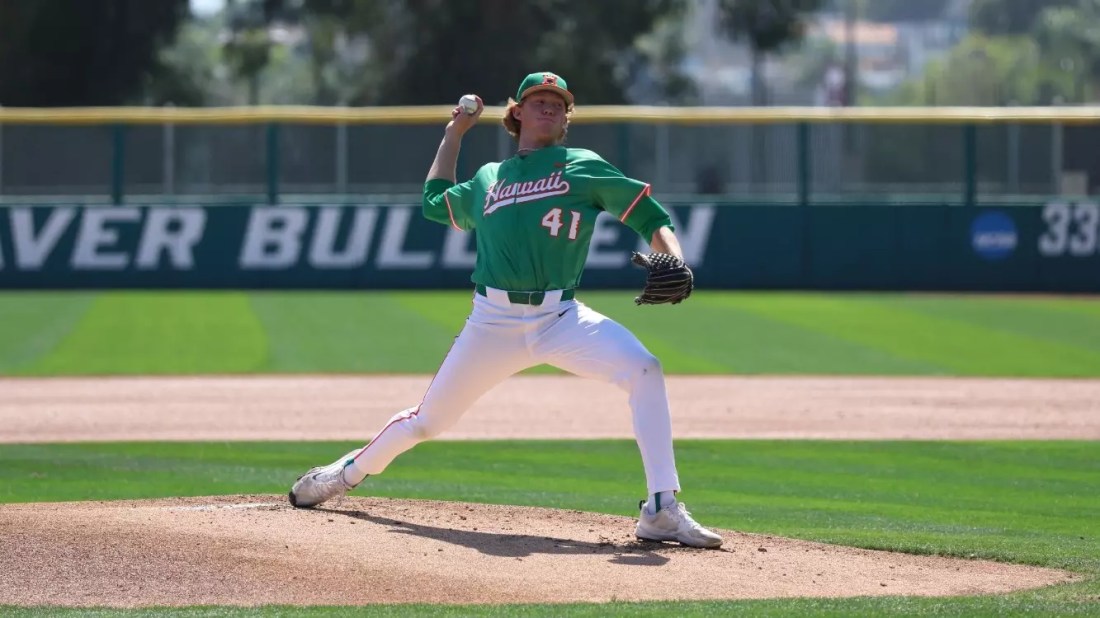
Liam O'Brien, in his green #41 throwback jersey, delivers a pitch.

Early March, as teams move into conference play, is when the college season begins to settle into its rhythm. Opening weekend adrenaline has faded, pitchers are starting to stretch deeper into outings, and hitters begin to reveal whether their early production reflects real skill or simply early-season timing against arms that are still building up.

This week brought a mix of environments and looks. I started in Westwood for UC Irvine at UCLA, moved down the freeway to Fullerton for UC Irvine at Cal State Fullerton, and finished the weekend in Long Beach for the final two games of the Hawai‘i–Long Beach State series.

As always, the focus was on draft-eligible players and prospects worth monitoring as the season unfolds.

Here’s what stood out.

UCLA Bruins

Roch Cholowsky — SS | 6’2”, 202 lbs. | Junior | R/R

Cholowsky looks like a professional the moment he walks onto the field. The frame is athletic and well proportioned — high waist, narrow hips, and good overall fluidity in the way he moves around the diamond. It’s an easy body to project.

Offensively, the swing is the standout tool. The bat stays in the zone for a long time and he finishes through the baseball with authority. The swing stays balanced throughout, and he reacts well to pitches on the inner half without losing his base.

There’s real leverage and bat speed here, along with present strength. The profile suggests legitimate power production, and it’s easy to see a 15–20 home run floor at maturity.

Defensively, I currently see an average shortstop with room for more. The body moves well and the actions are fluid. There is no pressing reason to move him off the position at this stage, and the arm strength supports the profile.

On the bases he accelerates well and uses his hips efficiently when turning, another indication of overall athleticism.


Roman Martin — 3B | 6’2”, 208 lbs. | Junior | R/R

Martin was the most impressive defensive third baseman I’ve seen so far this season… at least until the Long Beach State series.

His arm actions stand out immediately. The throwing motion is whippy but controlled, generating plenty of carry across the diamond. While most of his throws came from a traditional over-the-top slot, he showed the ability to adjust and throw effectively from multiple arm angles.

The hands and reactions were consistently sharp. He reads the ball well off the bat and moves comfortably at the position.

The body is athletic and durable enough to remain at third base long term, though if circumstances ever demanded it, the skill set would likely translate to right field as well. For now, though, there is no reason to move him.


Angel Cervantes — RHP | 6’2”, 215 lbs. | Freshman

Cervantes presents an interesting look on the mound. He’s lean through the torso with proportional shoulders and hips, though the lower half is somewhat thin for a pitcher of his size.

The delivery begins with a high leg kick that points almost toward second base before he drives down the mound. He holds the ball low through the delivery and reveals it late, releasing from a low three-quarter slot that adds deception.

He relies heavily on his fastball, but it’s a good one. The pitch shows riding life and plays well up in the zone.

His secondary mix includes a slider and a changeup. The slider is used effectively both to backdoor left-handed hitters and to frontdoor right-handers, while the changeup generates swings and misses within the zone.

The raw movement on the secondary pitches appears somewhat modest, but the deception built into the delivery makes the overall arsenal play better than the raw shapes might suggest.

UC Irvine Anteaters

Trevor Hansen — RHP | 6’2”, 195 lbs. | Junior

Hansen continues to look like the most complete draft follow among the arms I’ve evaluated so far this spring.

He has a lean, athletic build with room to add strength through the shoulders and upper back. The lower half provides functional strength without being overly thick, and he moves like a good overall athlete.

The arm is quick with excellent arm speed. His delivery can appear high-effort at times, even slightly violent, but he maintains enough balance and body control to repeat it consistently.

Hansen leans heavily on a fastball that sits 91–93 mph, and the pitch plays well thanks to its heaviness and his ability to locate it. He spots the fastball effectively and uses it both to challenge hitters in the zone and to expand the strike area.

His 12–6 curveball (around 83 mph) is a real weapon. It features significant vertical drop and he throws it confidently in any count, both for strikes and as a chase pitch.

The changeup (around 81 mph) showed the ability to generate whiffs within the zone, though it did not draw many chases in this particular outing.

When he missed with the fastball, the misses tended to be arm-side, suggesting command drift rather than deeper mechanical issues.

Velocity dipped slightly late in the outing, touching 89 mph by the fifth inning, but overall he repeated his mechanics well and maintained his approach.


Alonso Reyes — 1B | 6’0”, 195 lbs. | RS-Junior | R/R

Reyes is a converted catcher who now plays first base, and the athletic background shows.

The build is lean and athletic with noticeable lower-half strength and ropey forearms. He’s broad-shouldered without carrying excessive bulk, relying more on wiry strength than mass.

At the plate he shows discipline overall but will expand the zone against quality offspeed pitches. There is raw strength in the profile, though it did not consistently translate into game power in this look — something that may limit the offensive ceiling if he remains at first base.

Defensively, however, he moves extremely well for the position. The lateral quickness and reactions stand out, and he adjusts smoothly to hops while reading plays quickly.

The footwork is instinctive but still somewhat raw, which makes sense given his relatively recent transition to the position. At times the speed of the game can still catch up with him, but the athleticism suggests improvement with experience.

Given the mobility and arm strength, it would not be surprising if he eventually saw time in a corner outfield role as well.


Zach Fjelstad — SS | 5’11”, 190 lbs. | Junior | L/R

Fjelstad has a compact, durable build with a high-cut frame and solid overall athleticism.

The hands and arm are both playable. He receives the ball cleanly and can make throws from multiple arm slots, showing a strong internal clock on defensive plays.

However, his first step and range are both limited, and those traits likely prevent him from remaining at shortstop at the professional level.

The bat may carry the profile. In this look he ambushed a first-pitch changeup and drove it the opposite way over the left-field wall, showing the ability to adjust and generate impact.

Given the defensive limitations at shortstop, a future move to second base, third base, or even right field could allow the offensive profile to play.


Cade Castles — LHP | 6’2”, 175 lbs. | Freshman

Castles has a thin, long-limbed frame and releases the ball from a low, almost sidearm slot with good arm speed.

His best pitch in this look was a changeup, which he showed the confidence to throw in any count against both right- and left-handed hitters.

The fastball features good horizontal movement, while the breaking ball showed tumbling action but lacked sharpness.

The delivery includes a sweeping leg lift that does not always repeat cleanly when fatigue sets in. In this outing the command drifted badly, and he was hit hard by UCLA’s lineup, recording just two outs while allowing nine runs (five earned).

There are still interesting traits here, but the consistency will need to improve.


Peyton Rodgers — RHP | Sophomore

Rodgers was used briefly but showed intriguing traits.

His fastball sits 89–90 mph but features significant horizontal movement and comes out of his hand with a whippy arm action.

The changeup mirrors the fastball well out of the hand, which helped disrupt hitters’ timing.

Not a finished product yet, but someone worth keeping an eye on.

Cal State Fullerton Titans

Mikiah Negrete — LHP | 6’1”, 205 lbs. | Senior

Negrete has a compact, muscular frame with a strong lower half that drives his delivery.

His fastball sits 91–92 mph and shows vertical ride, generating swings and misses in the zone. He relies heavily on the pitch, pairing it with an 83 mph changeup used primarily to keep hitters honest.

The breaking ball — a 76 mph slurvy curve — did not prove effective in this look, and he appeared reluctant to use it.

Negrete worked deep into the game, reaching 98 pitches, though the fastball velocity dipped late. His 93rd pitch was an 89 mph fastball, suggesting limited stamina or velocity sustainability.

Defensively, however, he showed impressive athleticism. He drops his hips well, pivots quickly, and uses his front leg effectively to set up throws across the infield.

Given his age and physical maturity, it’s difficult to project additional velocity gains.


Cameron Kim — 3B/DH | 6’4”, 215 lbs. | Junior | R/R

Kim is long-limbed with room to add additional strength to his frame.

Offensively he shows strong strike-zone awareness and makes good swing decisions. The swing path is fairly level and produces a line-drive approach.

However, his barrel accuracy is inconsistent and he struggled against quality offspeed pitches in this look.

There may be more power in the profile if he learns to better utilize his leverage and incorporate additional lift into the swing.


Ty Thomas — 3B/1B | 6’3”, 215 lbs. | Junior | R/R

Thomas has a barrel-chested build with broad hips and carries most of his weight in the lower half.

Defensively he has a strong arm and soft hands, showing the ability to throw accurately from multiple arm slots and while on the run.

However, limited lower-body mobility likely pushes him away from third base long term.

Offensively he covers the plate well and shows the ability to drive the ball to all fields. He keeps his hands inside the ball but can speed up his swing against velocity on the inner half.

The body remains a concern, and I would need additional looks before committing to him as a draft follow.


Paul Contreras — RF | Junior

Contreras immediately looks like a ballplayer.

Lean and athletic with good strength, he favors a pull-side approach and handled inside velocity comfortably in this look.

Hawai‘i Rainbow Warriors

Elijah Ickes — SS | 6’0”, 190 lbs. | Junior | R/R

Ickes may currently be my favorite prospect in the Big West based on live looks this season.

The build is compact and strong, with a thick lower half and developed forearms and wrists.

Defensively he shows excellent instincts. His internal clock is outstanding and he never appears rushed. He moves extremely well to his right and shows real arm strength from the hole, including the ability to execute jump throws.

In the second game of the series he displayed great footwork while covering third base on a bunt and nearly turned a double play with a strong throw to first.

The reactions are excellent and the overall movement patterns are fluid and athletic.

Offensively he has a compact, line-drive oriented swing with good barrel feel. The bat enters the zone on plane and finishes with natural lift.

He reads spin reasonably well but will expand the zone at times. Improving pitch recognition could be the next step in his development.

Still, the overall profile — defensive actions, arm strength, and offensive feel — is extremely appealing.


Ben Zeigler-Namoa — 1B | 6’1”, 195 lbs. | Graduate Student | L/L

Zeigler-Namoa has a strong, well-filled frame and stays balanced through his swing with the bat remaining in the zone for an extended period.

He employs a line-drive approach to all fields and shows gap power.

Defensively he reads hops well and handles difficult balls cleanly.

However, given his age and position — and the fact that the offensive profile is solid rather than exceptional — he has been removed from my follow list.


Hekili Robello — RHP | 6’5”, 220 lbs. | Junior

Robello has a long, athletic pitcher’s frame with broad shoulders and strong legs.

He works downhill effectively and uses his lower half well through the delivery, releasing from a low three-quarter arm slot.

The fastball plays well despite unknown velocity readings, and he demonstrated the ability to move it in and out while changing eye levels.

The changeup consistently had hitters out in front, and the sweeping slider generated both swings-and-misses and chase.

Command was inconsistent in this outing, with misses often occurring when his downhill stride shortened.

He also showed an excellent move to first base and strong defensive instincts on the mound.


Liam O’Brien — RHP | 6’5”, 215 lbs. | Senior

O’Brien has the classic look of a power pitcher: tall, long-limbed, and well proportioned with a strong lower half.

His fastball sat 95–96 mph and touched 98, pairing with an 85 mph hammer curveball.

He commands the fastball well to the outer half and frequently challenges hitters at the top of the zone, generating swings and misses with the pitch’s arm-side life.

The curveball serves as a chase pitch capable of expanding the strike zone.

He hides the ball well in the delivery, holding it toward second base behind his shoulder before releasing from a high three-quarter slot with strong arm speed.

During the outing he showed resilience after allowing a home run, walk, and hit batter in succession, settling down and making adjustments.

Without a consistent third pitch, however, the long-term profile likely fits best in a relief role, where the power fastball-curveball combination could allow him to move quickly through a professional system.

He is also somewhat slow to the plate and did not show strong control of the running game.

Long Beach State Dirtbags

Trevor Goldenetz — CF | 6’0”, 180 lbs. | Freshman | L/R

Goldenetz looks like a potential future star for Long Beach State — if the program can keep him.

The build is lean and athletic with strength concentrated in the legs and core.

Defensively he shows advanced instincts for a freshman. His first step is clean, his routes are efficient, and he glides easily to baseballs with long strides.

The glove is steady and the arm strength is more than adequate for center field.

At the plate he shows plus bat speed, a compact stroke, and a line-drive approach with gap power and some pull-side pop.

He also shows an advanced feel for recognizing spin for his age.

Everything about the profile suggests a high-level collegiate center fielder, and he would not look out of place in a larger program should the transfer portal come calling.


Jake Evans — 3B | 5’11”, 180 lbs. | Sophomore | R/R

Evans has a compact, muscular build with strength throughout the upper body.

At the plate he generates natural loft and pull-side power with loud contact when he squares the ball.

However, he cheats slightly toward the outer half of the plate, leaving him vulnerable to velocity inside. The swing length also produces some swing-and-miss.

Defensively he reads the ball well, fields cleanly, and throws from a three-quarter slot with good carry.

He is not a burner but shows solid agility and mobility.


Dylan Lina — 1B/3B | 6’0”, 215 lbs. | Senior | R/R

Lina is a natural third baseman who has spent most of the season at first base due to the presence of Evans.

With Evans serving as designated hitter in this game, Lina returned to third base and handled the position competently. His lower-body mobility is solid and he reads the ball off the bat well.

The arm strength is roughly average for the position.

Offensively, the power is the defining tool. Lina hunts pitches on the inner half and has the bat speed to punish velocity there, demonstrated when he pulled a 95 mph fastball from O’Brien over the left-field fence.

He is an aggressive hitter who chases more than ideal, but the ability to change the game with one swing is real.

The raw power grades comfortably as plus.

What Midweek Games Actually Tell Us

As I settled into my seat at Jackie Robinson Stadium on Tuesday night to watch the UC Irvine Anteaters take on the number one team in the country, the UCLA Bruins, I was expecting a good game. After all, the last time these two teams faced off, it was the NCAA Regionals and UCLA held off a late surge by UC Irvine to hang on to an 8-5 victory, advancing to the Super Regionals and later on to the College World Series.

Since that matchup, UCLA is off to a torrid start, going 14-2 handing No. 23 Texas A&M and No. 4 Mississippi State their first losses of the season over the same weekend. Their UC compatriots down in Irvine have had a more tumultuous beginning to their season, going 1-4 to this point in March and falling to an overall 9-7 record.

Still, there is plenty of talent in the UC Irvine lineup, and there’s a reason they play the games.

After watching Angel Cervantes retire the side in order in the top of the first, freshman lefty Cade Castles took the mound. If you know what happened next, you might not believe me when I tell you that Castles looked good on the mound, but he was catching too much of the plate, and the Bruins offense made him pay. After a grand slam by Cash Dugger and a three-run shot by top prospect Roch Cholowsky, Castles was pulled after recording just two outs.

By the time the dust settled on the inning, the Anteaters were trailing 9-0, and the situation didn’t improve when they went down on six pitches. Ultimately, the contest wasn’t much of one, with UC Irvine on the wrong end of a seven-inning run rule, down 11-1.

One game doesn’t tell us much. But it did raise a question. At the risk of over-evaluating this game, it was hard not to sit there in Jackie Robinson Stadium and wonder what was happening: Did this lopsided victory mean anything about the college baseball elite and the mid-majors? Why do good college teams sometimes look completely overmatched in midweek games? And, perhaps more importantly, at least for the purposes of this blog, what do midweek games actually tell us about teams in the Big West Conference?

College baseball is typically built around weekend series. Weekend series feature the team’s best position players, their best starting pitchers, and full bullpen usage. Injuries aside, this is exactly how the coaches draw it up in fall ball: My best guys versus your best guys. Mano e mano. But when the calendar flips over into the weekdays, things change. Starting pitchers are untested freshmen, or guys on rehab stints, or just covering a few innings. The lineup may rotate. Pinch hitters and defensive replacements are used much more liberally.

A lot of college baseball fans live weekend to weekend, and for good reason. Weekend series are where teams reveal who they really are. But midweek games serve a different purpose entirely. They aren’t tests of quality so much as tests of depth. When Tuesday rolls around, programs aren’t sending out their aces or leaning on their most trusted relievers. They’re asking the rest of the roster to carry the game. This sets them up for success down the road, but only if they have a deep enough bench to make it work.

For programs in the Big West Conference, that is an important distinction. The league has long produced professional talent and competitive clubs, but it operates in a different ecosystem than the national powers it often faces in midweek games.

Programs like the UCLA Bruins baseball and the USC Trojans baseball recruit nationally and carry rosters built to withstand the grind of a long season. There are simply more arms available on a given weeknight. More pitchers capable of throwing a clean inning, more hitters capable of stepping into the lineup without much drop-off. When those programs reach the middle of their pitching staffs, they’re often still turning to highly recruited arms.

That isn’t to say the Big West lacks talent. Far from it. Every year the conference produces players who go on to professional baseball, and weekend series across the league regularly feature draft-caliber players squaring off against one another. But depth is harder to sustain. A team may have a strong weekend rotation and a handful of reliable bullpen pieces, yet still find itself scrambling for innings on a Tuesday night.

That’s where midweek games can start to look strange.

When a power program’s eighth or ninth pitcher of the week is facing a mid-major’s fifteenth or sixteenth option, the result can swing wildly. A couple of misplaced fastballs, a lineup stacked with experienced hitters, and an inning can unravel quickly. What looks on the scoreboard like a mismatch between teams is often just a mismatch between the back ends of two pitching staffs.

That dynamic is amplified on the West Coast, where travel and scheduling quirks often throw unusual matchups onto the calendar. A Big West club might find itself hosting a visiting team from the Big Ten Conference on a Tuesday night, or making a short trip to face a regional powerhouse between conference series. These games count in the standings, but they exist slightly outside the rhythm that defines the rest of the season.

For scouts and draft watchers, that can be important context.

Midweek games can be noisy evaluation environments. Pitchers may be working on strict pitch counts or testing a new role. Hitters might face four or five different relievers in the span of a few innings. Lineups change, defensive replacements cycle through, and the game itself can begin to resemble a controlled experiment more than a traditional contest.

That doesn’t mean the performances are meaningless. If anything, midweek games can reveal something different about a program. They show how coaches manage innings, how young pitchers respond to adversity, and how deep a roster truly is once the obvious contributors are removed from the equation.

Which brings us back to Tuesday night in Westwood.

The early inning that unraveled for the UC Irvine Anteaters baseball did not suddenly redefine the program, nor did it erase the talent in the Irvine lineup. If anything, there’s an argument that the Anteaters may be better off for it. A freshman starter saw a very tough lineup and learned a hard lesson about command. Multiple pitchers and position players got playing time against a premium Big Ten Conference opponent. Down the stretch, as injuries and circumstances inevitably test the roster, the coaching staff now has a wider pool of both data and experience to draw from. What that inning did illustrate was the strange ecosystem midweek games occupy in college baseball. When depth is tested against depth, the results can become lopsided in a hurry.

Weekend series will continue to tell us which teams are best equipped to compete in the standings. That’s where rotations line up, where bullpens shorten, and where teams reveal their true identities.

Midweek games tell us something else entirely.

They show how far a program’s resources extend beyond its best players, and in college baseball, that distance can be longer for some teams than others.

Week 3 Evaluator’s Notebook: Western Michigan @ CSUN

I spent Friday and Saturday at CSUN as the Matadors took on Western Michigan, and Sunday was spent watching Cal State Bakersfield against Texas Tech on ESPN+. Streaming notes differ widely from in-person notes, but I’m including all of my observations here.

Cal State Northridge Matadors

Traig Oughton — RHP | 6’4”, 185 lbs. | Junior

Oughton is shaping up into an interesting pitcher. He attacks with conviction, particularly to the inner third against same-handed hitters, pairing an arm-side running fastball with a slider that carries above average horizontal movement and generates chase. His approach inside creates uncomfortable at-bats and occasional HBPs when hitters guess spin incorrectly.

His breaking ball is a legitimate out pitch; he consistently got chases on it and it represents his best tool. Against left-handed hitters, he lived more to the outer half and occasionally showed cutter-like action, but he lacks a consistently reliable weapon to both sides of the plate. Second trips through lineups exposed him more, and command tended to tighten into nibbling when hitters began to square him up. Maintaining first-pitch strikes late in outings will be key to maximizing his arsenal.

He handles traffic well and maintains tempo with runners on; his run game control and poise are clear positives. The profile projects best as a middle reliever with a plus slider and repeatable plan, with further looks needed to determine whether he can round out a third weapon against lefties.


Adam Christopher — RHP | 6’3”, 165 lbs. | Senior

Christopher offers a pitchability-first profile. He works efficiently and consistently induces soft contact, despite lacking a swing-and-miss offering. His fastball shows some arm-side action and he maintains poise with runners, controlling tempo and sequencing.

Across his outing, he pitched effectively given the defensive context; several early runs against him were more a product of lack of clean defensive plays than decisive failings. He lacks a distinct out pitch and does not miss bats consistently, which limits a pro projection. As a collegiate starter, he can keep his club in games and generate weakly hit balls, but further development or elevation in stuff would be necessary to elevate his profile.

Matthew Thomas — LF | 6’3”, 205 lbs., R/R | Junior

Thomas carried his hot start into the weekend. He showcased raw strength, timing, and bat control, driving a fastball over the outer half roughly 400 feet to center and lifting against a shift by going the other way into deep left. He’s strong athletically without needing excess swing speed, and his body works in harmony — upper and lower halves synchronized through impact.

With competent baserunning mechanics (not burner, but controlled), Thomas profiles as a corner bat with present strength and advanced feel. The remaining questions center on handling top-level spin and velocity consistently, but the tools are present to establish a reliable offensive floor.


Kyle Panganiban — 3B | 5’11”, 175 lbs., R/R | RS-Sophomore

Panganiban’s weekend reinforced a nuanced view. Defensively, he struggled — below-average arm strength and footwork limited his effectiveness, and his range does not project comfortably across the diamond at a professional level.

At the plate, he showed barrel feel with a home run on an outer-third offering, but his balance and swing sequencing suggested timing issues. He was often out in front of offspeed and displayed slower first-step speed to first base.

His production is undeniable, but the underlying tools indicate a possible “mistake hitter” profile rather than a bat that will separate at the next level. He’s worth watching, but the profile does not yet project a clear professional position or impact tool.


Cal State Bakersfield Runners

Elgin Bennett — OF | 6’0”, 210 lbs., L/L | Senior

Bennett blended patience with impact this weekend. He showed advanced plate discipline, laying off quality breaking balls and staying true to his plan. His bat speed allows him to handle premium velocity and square up fastballs over the inner third, evidenced by a loud home run to right.

He scored a double by inside-outing a fastball late in the zone, illustrating adjustability and feel for line drives to all fields. He used the whole field and fought off tough pitches with two strikes, indicating a mature offensive approach.

Defensively, while direct reads from stream footage are limited, Bennett ran hard to balls and made several good plays in left, showing athleticism and range consistent with his size. The combination of plate skill and athletic actions makes him a bat-driven corner presence worth tracking.

Kanoa Morisaki — C | 6’0”, 200 lbs., S/R | Junior

Morisaki emerged as one of the weekend’s most intriguing hitters. Behind the plate, he controlled wild pitches, managed the game well, and displayed solid receiving skills. Offensively, he showed restraint early in counts and did not chase breaking stuff; he remained competitive against upper-tier velocity, handling 93–96 mph heat with ease.

His bat stays on the ball deep into counts, and he routinely demonstrated the ability to use the whole field. He finishes his swing with natural lift, implying an ability to drive baseballs consistently rather than merely square up mistakes. He also ran the bases competently when underway.

Switch-hitting catchers with this level of approach and receiving competency are uncommon; Morisaki should be considered a high-follow player if he continues to show this blend of offensive feel and defensive polish.

Roman Bracamonte — RHP | 6’5″, 195 lbs. | RS-Junior

Bracamonte showcased good speed variation and eye-level change, which helped him induce consistent soft contact. His delivery includes deceptive elements due to body position and short-arm action, which can mask velocity and disrupt timing.

However, his soft-contact profile comes with limited swing-and-miss, and hitters were able to put balls in play routinely, even if weakly. There was not a clear out pitch during this look, and without that missing element, the profile currently resembles a functional collegiate starter more than a future professional arm.


Western Michigan Broncos

Ty McKinstry — RHP | 6’0”, 200 lbs. | Senior

McKinstry was the most compelling arm seen this weekend. His fastball sat in the low-90s with late arm-side tail, inducing multiple swings and misses and freezing hitters in the zone. He mixed a firm 87 mph slider and a curveball near 77 mph with good spin and separation, and complemented the fastball with an 81 mph changeup that kept timing honest.

His sequencing was advanced; early in counts he attacked the edges with strikes and commanded multiple velocity planes. He induced high first-pitch strike rates and took aggressive pursuits away from hitters who were unprepared for his mix. The curveball’s horizontal depth and the slider’s tight sweep provide quality out-pitch options.

McKinstry showed feel for all four offerings, command of the zone, and the ability to avoid middle exposure. This is a mature collegiate arm with pitchability and sequencing that translate beyond raw readings.

Tanner Mally — CF | 5’11”, 180 lbs., R/R | Junior

Mally’s 1.261 OPS through his first nine games was no mirage; he demonstrates sound barrel control, strong wrists, and disciplined swing decisions. His bat stays in the zone and he consistently identifies spin, with a hands-to-ball approach that produces consistent contact. The bat speed is not elite, but it is efficient and capable.

Defensively, his routes in difficult sun conditions were uneven, and while he is quick moving to baseballs and athletic in the outfield, he lacks elite recovery speed to compensate for suboptimal reads. Unless he tightens his center-field coverage and routes, a move to a corner is more realistic as a pro projection.

Week Two Evaluator’s Notebook: Cal @ UC Irvine, Rice @ USC

There’s something gratifying about watching a baseball weekend unfold in person: the rhythm of the game, the adjustments hitters make in real time, pitchers trying to carve out an identity. Week Two brought that in spades at Anteater Ballpark.

After Opening Weekend’s UCSD–UCLA series, I headed down to UC Irvine for games one and three against Cal, with a Saturday-night stop at USC for Rice–USC.

Here’s what stood out:

UC Irvine Anteaters

Trevor Hansen, RHP — 6’2”, 195, Junior

Hansen works with narrow shoulders and hips and doesn’t yet fully use his lower half, but he maintains effective mechanics and control. Fastball sits 91–92, buried down and glove-side, generating swings over the top. The breaking ball is effective inside on right-handers and for called strikes. He commands the black on both sides of the plate and pairs it with a changeup he can throw in any count. First-pitch strikes were excellent — 21 of 30 — and hitters did not feel comfortable in the box. Velocity dipped slightly late, but he found extra ticks when needed. No deception in delivery, but pitch mix and control keep hitters off balance. Early projection shows starter potential with continued refinement.

Tommy Farmer, CF — 6’3”, 210, B/T R/R, Junior

Farmer’s defense is impressive. First step and route efficiency are excellent, covering balls over his head and laterally with control. Not elite speed, but instincts and arm make him a viable center fielder at the next level. Turns hips well, accelerates efficiently, and runs the bases with good inline mechanics.

At the plate, he maintains a line-drive swing with above-average bat speed, sprays to all fields, and stays in the zone. Against quality breaking balls, he expanded and did not fully handle spin, indicating room for growth. Overall athleticism is real, and hit tool versus secondary stuff will define ceiling.

Zach Fjelstad, SS — 5’11”, 190, L/R, Junior

Fjelstad has strong defensive instincts with good lateral movement, consistent footwork, and over-the-top throwing mechanics. Arm strength is average, and he wasn’t tested with high-pressure infield throws.

Offensively, he maintains pull-side authority and a line-drive approach similar to Farmer but with less bat speed. His two-strike approach is strong; he protects the plate, shows good barrel awareness, and can handle spin when adjusting. Against quality breaking balls, he sometimes expanded, but also demonstrated the ability to handle a changeup away. Overall, the swing tool is real, with consistency versus secondary stuff determining offensive projection.

Tim Grack, RHP — 6’1”, 195, RS-Sophomore

Grack threw roughly 35 pitches in relief. Fastball sat 92–93, touching 95, with good shape. Deception is a strength — he tunnels well, hiding the ball until late in his delivery. Slider is usable for strikes and chases, while the changeup was less visible but reportedly present.

Important context: as a freshman in 2024, Grack appeared in 16 games with eight starts before undergoing Tommy John surgery, missing 2025. Current relief deployment likely reflects recovery and workload management. The arm is live and competitive; the question going forward is whether he can deepen the mix enough to stretch back into a starter role.


California Golden Bears

Oliver de la Torre, RHP — 6’4”, 225, Junior

De la Torre has a narrow body with room to add strength, particularly chest and back. Fastball sits 91–92 with glove-side movement, almost cutter-like at times. The changeup is a weapon, generating whiffs both in and out of the zone. He switches speeds effectively and does not panic with traffic on the bases, staying with his game plan.

Command is inconsistent; he misses in all directions, and hitters fouled him off comfortably at times. Early projection leans reliever if strike-throwing tightens, with the changeup providing a strong carrying pitch.

Hideki Prather, C— 5’10”, 195, R/R, Junior

Prather was a menace all weekend. Controls the zone, consistently finds the barrel, and loves to ambush first pitches. Pulls with authority and runs the bases well for a catcher. Lean and athletic. With two strikes, a well-shaped breaking ball can get him to expand, but overall he was the most consistently dangerous offensive presence for Cal.


USC Trojans

Grant Govel, RHP — 6’0”, 200, Sophomore

Govel’s fastball sat 92–93 with arm-side run, backdooring righties and attacking lefties inside. Changeup at 82 mph fades to arm side late, mirroring the fastball and getting whiffs in and out of the zone. Throws the 78 mph 10-to-5 curveball as a weapon, especially versus lefties. Also showed what looked to be a softer 88 mph slurvy slider with less impact.

Govel pounded the zone. Command and movement were repeatable, baffling hitters, and early results — 21 strikeouts, two walks in 12 scoreless innings through two starts — reinforce the projection. Controlled movement and pitch mix keep him atop the weekend’s arms.

Kevin Takeuchi, CF — 5’10”, 180, R/R, Junior

Takeuchi has an athletic build and adjusts well to spin, sending balls back up the middle. Stays inside the ball with pull-side authority, rarely chases, and demonstrates good speed and base-running mechanics. Did not get defensive chances in this look, leaving that side incomplete. Offensive approach is disciplined and contact-oriented.

Opening Weekend Evaluator’s Notebook: UCSD at UCLA

After what seemed like an endless winter, the college baseball season is upon us, and I was present in Westwood for the first two games of UC San Diego’s opening series against the number one team in the country, UCLA. Opening Day brings renewed hope and enthusiasm, but it also brings a chance to see how players have evolved since the year prior. Some are serving in new roles, some have spent months in the weight room, and some are fresh off of their first wood-bat experiences. It’s always fun to dig in and see how they’re developing.

For all the hype surrounding opening weekend, however, it’s important to remember that it’s just three (or, in my case, two) games. Bodies are not fully ready yet. Players are still learning game speed, and some of them are in new positions or roles. It’s also just February. Bodies aren’t fully stretched out, roles are still settling, and overreaction is a real risk this early in the calendar.

My goal in this series was to pay attention to the draft-eligible prospects – primarily from UCSD, but since we were at UCLA, I had my eye set on one other player, as well:

When the dust settled on the 2025 season and evaluators began looking ahead to 2026, UCLA junior shortstop Roch (pronounced “Rock”) Cholowsky found himself near the top of many boards. It isn’t hard to see why. At 6’2”, 200 pounds, he looks the part, and after slashing .353/.480/.710 as a sophomore, the offensive upside is obvious.

Cholowsky brings a physical presence to the box and shows advanced pitch recognition. The bat is quick through the zone with natural lift, and he drives the ball with authority to all fields — including a right-center home run and a double in game two. When he gets in trouble, it tends to come when he cheats pullside and drifts out in front, but when he stays through the middle of the field the impact is real.

Defensively, my evaluation is less settled. He charges the ball well and can change speeds effectively, but his focus wavered at times over the weekend, and his range to the right side did not stand out. The arm strength from the hole remains a question. Based on this look, the bat profiles comfortably; whether he remains at shortstop long term is less certain.

For the Tritons, Michael Crossland is a 6’0”, 210-pound junior center fielder with a taut, likely maxed-out frame. At the plate, he lets the ball travel deep and shows the ability to adjust when fooled, but quality changeups can get him out front and induce rollovers. His coverage on the outer third is limited, and while his bat path isn’t especially efficient — he tends to throw the barrel at the ball — his strength allows him to generate lift and impact when he squares it.

Defensively, the athleticism is evident but the range is stretched in center field. He gets a solid first step and generally runs clean routes, though he can overrun balls and struggles to decelerate efficiently. His speed plays better moving forward or laterally than dropping back, where he looks more rigid. The arm is accurate with average power, aided by clean footwork and weight transfer, but overall range limits the profile in center. Right now, he looks like a strong college player with a narrower margin for error at the next level.

UCSD’s Friday night guy, Steele Murdock, was a guy I thought could be one of the better bullpen arms in the country, but the Tritons are giving him a chance to start this season. He lasted just 2.1 innings in this look, but the raw stuff was sharp. He worked in the mid-90s with sink and showed both a quality curveball and a usable changeup, generating swings and misses over the top on all three offerings. When his delivery is synced — particularly when his hips stay aligned — the arsenal plays at a high level.

There are mechanical inconsistencies, however. His front hip has a tendency to fly open, leading to glove-side misses, and he would benefit from greater separation between his upper and lower halves to improve consistency and command. Conditioning also appeared to be a factor, as he began to labor in the third inning. After a defensive lapse behind him, the outing sped up on him and unraveled quickly.

The ingredients are there, but the profile currently carries significant reliever volatility.

Quick Looks

A few more guys who caught my attention during the series. None are full-profile evaluations yet, but each flashed something worth tracking:

  • UCSD 1B Gabe Camacho is a physical, strong-bodied first baseman with present raw power and quick hands through the zone. He generates natural lift and showed in-game impact. Defensively, he displays better reflexes and twitch than expected for the body, with soft hands around the bag. Could be an upward mover this spring if the power production holds.
  • UCLA RHP Logan Reddemann threw 90 pitches on opening night and maintained his velocity deep into the outing. Works with an uptempo delivery and showed the ability to carry his stuff through a starter’s workload.
  • UCSD IF J.C. Allen does not profile as a natural third baseman long term. He comes in on the ball well and shows clean footwork with reliable hands, but lateral range is limited and the arm lacks carry despite accurate throws and good lower-half setup. The defensive skill set and body type suggest a likely move across the diamond.
  • Tritons SS Anthony Potestio shows patience early in counts but can be fooled by quality offspeed and late-breaking spin. Defensively, he gets a good first step to either side and shows adequate lateral quickness, though the bat-to-ball quality against secondary stuff will determine how the profile plays.

Why UC Santa Barbara Is Fine on Sundays

This one came via ESPN+, not live, so keep that in mind. Even so, the takeaway is clear: UC Santa Barbara is just fine on Sundays.

The rotation is anchored by Jackson Flora and Nathan Aceves, two arms with legitimate first-round potential. That’s where the draft spotlight is, and both carry the kind of stuff that will make crosscheckers pay attention all spring.

But behind them is Kellan Montgomery, who should absolutely not be overlooked.

Montgomery started Friday nights at Long Beach State in 2025 and closed games as a freshman in 2024. That kind of experience, both in high-leverage bullpen spots and in the rotation, shows in the way he pitches. He handles leverage like someone who’s been there.

Montgomery’s fastball sits 90–92 mph, misses barrels, and has some sink and late movement that almost acts like a changeup. He consistently generates soft contact. He’ll challenge hitters up in the zone to change eye levels, and he can expand horizontally to get chases. It’s not premium velocity, but it’s functional, deceptive, and effective.

His cutter sits around 82, giving hitters another look and keeping them honest. He can locate it for strikes.

The changeup is his best secondary pitch. He throws it in any count, commands it down in the zone, and gets swings and misses from lefties. It’s a weapon, not a “show-me.”

Montgomery’s slider has late bite and can get chases; he’ll also throw it for strikes to righties early. He’s willing to use it, not just show it.

Montgomery controls the running game, works with intent, and sequences with purpose. He looks like a pitcher who understands how to navigate a lineup without putting himself in trouble.

With Flora and Aceves drawing the draft attention, Montgomery doesn’t need to be spectacular. He just needs to be steady, and based on this early-season look, that’s exactly what he is.

Montgomery, K.: 5.1 IP, 4 H, 4 R, 4 ER, 4 BB, 4 K.
24 TBF. 5 FO/7 GO.
91 TP, 54 Strikes.

Three Big West Breakout Names to Know for 2026 (According to D1Baseball)

Every January, D1Baseball does something interesting after fall coverage wraps up. They ask a question:

Who actually stood out?

The answers tend to be names that looked different during fall workouts and intrasquads. Players whose arrows appear to be pointing up heading into the spring. Some are obvious. Some are not.

Buried in this year’s list were three Big West position players: Cameron Kim (Cal State Fullerton), Tommy Farmer (UC Irvine), and Braxton Thomas (Cal Poly).

If you follow the conference closely, there’s a decent chance you haven’t seen much of any of them yet. Two are new to the Big West. The third has spent most of his first two seasons trying to stay on the field. That’s fine. This isn’t a scouting report, and it’s not a declaration that any of these players are about to dominate the league.

Think of this instead as a heads-up. These are names national writers flagged before the season started, and there are clear, practical reasons why each one could matter in the Big West in 2026.


Cameron Kim, 3B/SS – Cal State Fullerton

D1Baseball’s note on Cameron Kim was short and blunt: there may not be a player in the Big West with more upside

That’s not language they use casually.

Kim arrives at Cal State Fullerton after two seasons at UCLA where consistent playing time was hard to come by. Over that span, he made 17 starts total, bouncing in and out of the lineup. That alone makes him difficult to evaluate. Some players force the issue immediately. Others need a longer runway before anything stabilizes.

Physically, Kim looks the part. He’s listed at 6-foot-3, 205 pounds, with a frame that fits in the middle of a college lineup. He also offers defensive flexibility between third base and shortstop, which matters at Fullerton, where versatility has always been valued and opportunities tend to follow players who can handle multiple roles.

What changes here isn’t just the uniform. It’s the situation. At UCLA, Kim was trying to crack a veteran roster. At Fullerton, he’s being brought in to play. If he hits, the at-bats will be there. That’s a meaningful difference, especially for a player whose college career to this point has been defined more by limited reps than by failure.

A breakout for Kim doesn’t need to look dramatic. It probably looks like everyday playing time, more consistent contact, and stretches where the physical tools show up often enough to stop being theoretical. Sometimes upside lingers simply because no one ever gives it room to surface. Fullerton appears willing to do that.


Tommy Farmer, OF – UC Irvine

Tommy Farmer is the most established player on this list in terms of experience, even if Big West fans are just getting to know him.

A transfer from Texas, Farmer made 48 starts for the Longhorns last season, hitting .249 with 13 doubles while playing in one of the deepest lineups in the country. Even if the stat line doesn’t jump off the page, earning regular at-bats in the SEC isn’t trivial.

What stood out to D1Baseball — and what should matter locally — is how Farmer fits at UC Irvine. Head coach Ben Orloff described him as a 70-plus runner and a true center-field athlete, the type of player who impacts games beyond the box score.

That profile plays well in this conference. Irvine has built winning teams around defense, speed, and pressure, and Farmer checks each of those boxes. He doesn’t need to become a middle-of-the-order bat to be valuable. If he tightens his zone control a bit, puts more balls in play, and lets his speed work, he becomes a difficult matchup quickly, both offensively and defensively.

The Colin Yeaman comparison Orloff mentioned isn’t about identical skill sets so much as trajectory. It’s about a player arriving with tools and experience, then taking a step forward once role and environment align. If Farmer breaks out, it likely won’t be loud at first. It’ll show up as better at-bats, cleaner reads in center, and more pressure on opposing pitchers, before it becomes harder to ignore.


Braxton Thomas – Cal Poly

Braxton Thomas might be the most straightforward breakout case on this list, even if he’s also been the hardest to evaluate.

At 6-foot-2, 220 pounds, Thomas looks like a middle-of-the-order hitter the moment he steps into the box. Power has never been the question. Availability has.

His first two seasons at Cal Poly were disrupted by injuries, limiting both his reps and his visibility. That makes it difficult to get a clean read on who he is as a college hitter. You can’t evaluate consistency if a player never gets the chance to be consistent.

According to D1Baseball’s Eric Sorenson, this fall was different. Thomas finally had a healthy, uninterrupted fall, and the reports were emphatic. He was described as the best hitter on the team during workouts — not in flashes, but day to day.

That matters for a Mustangs lineup that lost some power from last season. In a conference where true power threats can be scarce, even one hitter who forces pitchers to be careful can change how an entire lineup functions.

For Thomas, the breakout formula is simple: stay on the field. If he does, the physicality and bat speed suggest the production should follow naturally.


Why These Names Are Worth Noting

None of this requires blind faith. D1Baseball didn’t present Kim, Farmer, and Thomas as sure things – only as players who looked different this fall, whose arrows are pointing up.

What ties them together is timing.

Kim is stepping into a clearer role.
Farmer is landing in a system that values exactly what he does well.
Thomas is finally healthy and getting uninterrupted reps.

Those are the conditions under which breakouts tend to happen.

For Big West fans, this isn’t about prediction. It’s about awareness. These are names worth circling early – players you might not have seen much yet, but ones national eyes have already flagged.

Sometimes the breakout doesn’t announce itself.
Sometimes it just shows up, and keeps showing up.

Kyle Tucker, Gavin Lux, and The Paradox of Plenty in Major League Baseball

Why abundance weakens incentives – and why constraint keeps winning

In economics, the paradox of plenty—often called the resource curse—describes a counterintuitive outcome: countries rich in natural resources frequently develop weaker institutions than those forced to operate under scarcity. The problem is not abundance itself. It’s that when resources are cheap to replace, failure becomes survivable, and learning slows down.

Major League Baseball has quietly built a similar system.

Draft capital, revenue sharing, and payroll flexibility function as renewable resources. They replenish automatically. And because they do, they can weaken the very incentives that produce strong organizations. Teams with abundant access to inputs often underperform those forced to operate under constraint. Not because they are less intelligent or less ambitious, but because constraint is what disciplines institutions.

To understand why, we need a simple framework.

How Teams Actually Turn Resources Into Wins

Every baseball organization operates with three moving parts:

  1. Resources: draft position, prospect capital, payroll flexibility, revenue inflows
  2. Institutions: player development, scouting, analytics, contract discipline, internal accountability
  3. Constraints: payroll limits, competitive pressure, ownership tolerance for failure

Resources by themselves don’t produce wins. They have to be converted. That conversion is handled by institutions, and institutions only improve when constraints force them to.

When replacement resources are cheap or automatic, mistakes carry little penalty. When constraints bind, mistakes become costly, and learning accelerates.

This produces two very different organizational paths:

  • One where teams accumulate inputs but fail to improve their conversion process
  • Another where scarcity forces discipline, innovation, and sustained overperformance

That difference is the paradox of plenty in baseball form.

This offseason gives us three live case studies.

1. Kyle Tucker: When the Boom Ends, Rents Get Collected

Kyle Tucker’s eventual arrival in Los Angeles is best understood not as a single free-agent splash, but as a two-stage redistribution of surplus value.

The Houston Astros traded Tucker to the Cubs during the 2025 season, well before this offseason. That wasn’t a sign of failure. It was an acknowledgment that Tucker had crossed a threshold from surplus asset to fully priced one.

For nearly a decade, Houston operated under extreme constraint:

  • High draft capital from losing seasons
  • Little margin for payroll error
  • Strong internal pressure to convert cheaply acquired talent

Those constraints forced elite institutional performance. The Astros turned draft position into stars under control, below-market wages, and organizational depth that masked mistakes. That was the resource boom.

The trade signaled the end of that phase.

Once Tucker reached the open market and signed for top-of-market money with the Dodgers, the process completed itself. Surplus value created under one institutional regime was repriced and absorbed by another.

This is where the Norway analogy applies.

Norway is often cited as the rare country that avoided the resource curse. It didn’t spend oil money as it arrived. It built institutions first, saved surplus in a sovereign wealth fund, and only then allowed that wealth to flow through the economy.

The Dodgers occupy the same position in baseball.

They didn’t draft Tucker. They didn’t tank for him. They didn’t reorganize their system to accommodate him. They simply absorbed him—financially and structurally—without changing how they operate.

That’s abundance after discipline. Resource importation without institutional erosion.

This is not evidence the Astros failed. It’s evidence they succeeded so thoroughly that the constraints which built them disappeared.

Houston created surplus under constraint; Los Angeles absorbs surplus after discipline.

2. Gavin Lux for Brock Burke: The Illusion of Agency

At the other end of the spectrum sits a transaction like the Reds’ three-team trade involving Gavin Lux. The decision to move Lux after just one season is defensible in isolation, which is precisely what makes it revealing.

Cincinnati acquired Lux at real cost (parting with Mike Sirota and a draft pick) to address a clear need on a roster hovering at the edge of contention. Lux was not a bust. In fact, he was one of the Reds’ more productive hitters in a lineup that struggled to score consistently. The team narrowly made the postseason, gained a full season of information, and then reversed course, sending Lux out for Brock Burke.

Publicly, the explanation is clean: payroll flexibility, roster clarity, and a path cleared for Sal Stewart in the Cincinnati lineup.

Institutionally, it’s incoherent.

If Stewart was the plan, Lux should never have been acquired at that price. If Lux was a meaningful test, one season was insufficient to evaluate either the player or the process that identified him. In either case, the organization exits the transaction cycle having learned nothing durable. The Reds no longer have Lux. They no longer have Sirota. They no longer have the draft pick. Their competitive position is unchanged, and their confidence in their internal evaluations is no stronger than it was before.

This is what late-stage resource dependence looks like in baseball. When institutions are weak, organizations substitute motion for progress. Transactions create the appearance of agency, but they do not improve the conversion process that turns resources into wins.

For a low-revenue team like the Reds, the problem is not a lack of flexibility. It is too much of it. Each move resets the accountability clock. Each reversal dissolves the consequences that force learning. The constraint that should discipline decision-making never binds.

Changing the constraint would mean fewer moves, not more. Longer commitments, not quicker exits. Public and internal alignment on prospect timelines, even at the cost of short-term discomfort. Letting mistakes persist long enough to diagnose them instead of erasing them with the next transaction.

The Lux trade did not fail because it was wrong. It failed because, after a full season of information, it left the organization exactly where it started – minus assets, minus conviction, and no closer to understanding how it turns inputs into outcomes.

That is the illusion of agency.

3. Bo Bichette to the Mets: Capital as a Substitute for Learning

The Mets signing Bo Bichette to a three-year, $126 million deal is the most revealing case from this week – not because it’s a bad signing, but because of what it signals.

This is not an indictment of Bichette. It’s a diagnosis of the regime.

Deep into the Cohen era, a pattern is emerging:

  • Money absorbs mistakes faster than institutions can learn from them
  • Each new acquisition resets the accountability clock
  • Success is always deferred to the next transaction

In the framework outlined above, the issue is clear:

  • Resource inflow is enormous
  • Constraints are artificially muted
  • Institutional quality struggles to compound

That’s why this signing feels different after another missed postseason. It’s not part of a visible accumulation process. It’s an assertion that resources can stand in for structure.

Economists point to this exact behavior in early-stage resource curses: capital consumption without institutional reinforcement. The danger isn’t spending too much. It’s learning too slowly.

Scarcity Builds Winners

The paradox of plenty in MLB is not about disliking money, draft picks, or ambition. It’s about understanding what actually produces sustained success.

Resources matter. But they are inert without institutions. And institutions only strengthen when mistakes are costly enough to demand correction.

Constraint is not the enemy of winning. In baseball, it is often the cause of it.

As surplus continues to flow – from draft to market, from control to capital – the real question facing fans and front offices is not who is accumulating the most resources.

It’s this:

Which teams are building institutions, and which are just replenishing inputs?

That distinction determines who escapes the curse.

Draft Day’s Hidden Trap: How the Winner’s Curse Skews Teams’ Best Laid Plans

When the Orioles drafted high-school flamethrower Grayson Rodriguez with the 11th pick in 2018, they were buying a future they could only imagine. Last night, that distant bet finally came to a head. With injuries having clouded Rodriguez’s trajectory, Baltimore traded the still–cost-controlled right-hander to the Angels for a single season of Taylor Ward, converting tomorrow’s hope into today’s utility and crystallizing the draft’s enduring tension: how much faith to place in what a teenager might become.

By flipping a once-prized but uncertain future asset for an immediate, short-lived upgrade, the Orioles offered a real-time snapshot of a long-standing friction in draft rooms: how to weigh projected upside against usable, bankable production right now.

Baseball’s amateur draft is nominally designed to resolve that tension. Every summer, 30 clubs take turns selecting the best teenage arms and college bats the country can produce. The worst teams get the best picks, bonuses are governed by slot values, and everyone walks away with a prospect who, at least in the press release, lays out a route to Cooperstown. But beneath the slot-value spreadsheets and bonus-tracker pages lies a less flattering reality – one shaped by runaway optimism, herd behavior, and a phenomenon economists call the winner’s curse.

What makes this dynamic interesting is not that the draft’s rules are irrational. The slot system and bonus pools were introduced to curb overspending. But people aren’t purely rational. Even with guardrails, front offices keep falling for the same behavioral traps auction theorists warn about. Understanding why sets the stage for the economic and behavioral dynamics that follow.

The auction that isn’t an auction

The winner’s curse originated in the 1970s when oil companies noticed that Gulf of Mexico drilling leases tended to deliver poor returns. Petroleum engineers Edward Capen, Robert Clapp and William Campbell found that companies were systematically overpaying because they lacked good information about the leases’ true value. When bidders compete under uncertainty, the company that guesses highest (i.e., most optimistically) wins, and is therefore most likely to have overshot the mark. Behavioral scientists later generalized the idea: in auctions or competitions where all participants value the same asset, the winner is often the one who overestimates its worth the most.

The MLB draft isn’t literally an auction, but it functions like one in several important ways. Teams “bid” on players by spending draft capital (picks) and bonus‑pool money. The pick order is fixed rather than chosen. Slot values serve as bidding chips: clubs can go under slot to save pool money or over slot to woo a player. For example, a team might take a player underslot at No. 5, then use the savings to sign a coveted prep arm overslot in round two. Everyone values a prospect’s future wins above replacement (WAR) differently based on scouting looks, performance data and medical reports. And the uncertainty is extreme: 18‑year‑old arms may need Tommy John surgery tomorrow, while a college hitter’s breakout may vanish under better pitching.

In this world of uncertain talent, the winner’s curse works its mischief. The team that is most bullish on a prospect’s upside will expend the highest pick and largest bonus. If its evaluation is merely average rather than exceptional, it has overpaid relative to the field. That’s the curse: Winning the rights to a player simply because you were the most optimistic. As Capen, Clapp and Campbell observed, the winning bid often exceeds the item’s intrinsic value because the winner overestimates what it is worth. In baseball, overestimation manifests as inflated signing bonuses, lost pool flexibility and, years later, painful retrospective pieces about draft busts.

How MLB’s slot system masks the curse

On paper, MLB’s draft should reduce the risk of overbidding. Since 2012, every pick comes with an assigned slot value and each team receives a fixed bonus pool, turning the draft into something close to a regulated marketplace. In theory, this should limit the runaway optimism that produces the winner’s curse: if the price is pre-set, no one can pay too much.

In practice, slot values function less like fixed prices and more like currency. Teams routinely underslot early picks to bank pool space, then push that saved money toward later targets they believe are undervalued. The results can be dramatic. In 2024, for example, the Reds signed second-rounder Tyson Lewis for $3.05 million—well above his $1.80 million slot—an aggressive overslot bet enabled by savings elsewhere. Moves like this show how fluid the system really is: clubs aren’t bound to slot values so much as they’re choosing where to concentrate their optimism.

This is where intent and bias blur together. Underslot strategies are often framed as rational portfolio management. Trade a bit of surplus on a predictable early pick to take a bigger swing later. But reallocating money doesn’t eliminate the risk of overpaying; it merely shifts that risk deeper into the draft, where uncertainty is even greater. Any overslot deal, whether calculated or impulsive, still hinges on a team’s internal conviction that its evaluation is sharper than the industry’s. And that belief (our read is right, and everyone else is low) is exactly the mindset that gives the winner’s curse room to work.

The slot system, then, doesn’t prevent overbidding. It obscures it. By packaging optimism as strategy and allowing teams to move money around the board, the system encourages clubs to express their highest-variance bets not at the top of the draft, but in the murkier middle rounds, where the gap between a confident projection and a faulty one is widest.

High‑school tools and projectability

Prep players tantalize scouts with raw tools and long developmental runways. Showcase circuits amplify scarcity, persuading teams that a 17‑year‑old’s bat speed or arm strength is rare. When multiple clubs covet the same player, he becomes a classic common‑value asset. Without reliable performance data against top competition, evaluations diverge wildly. The team that dreams the brightest dreams writes the biggest check. The Nationals, for instance, saved money on their first‑round selection and then poured $2.81 million (about $1.7 million over slot) into second‑rounder Luke Dickerson. In winner’s‑curse terms: Differing valuations of a prep prospect mean the highest optimist pays a price that exceeds the player’s expected value.

College arms and the illusion of safety

Conventional wisdom holds that college pitchers are safer than high‑schoolers. Yet pitching is hazardous regardless of age. The epidemic of UCL tears and velocity‑driven development undermines the “floor” teams think they’re buying. The Mets learned this in 2021 when they drafted Kumar Rocker 10th overall. Rocker agreed to a $6 million bonus ($1.26 million over slot) but the club balked at his medicals and declined to sign him. Similarly, in 2014 the Astros selected high‑school phenom Brady Aiken first overall. Team doctors flagged his UCL, and Houston tried to reduce his $6.5 million agreed bonus to $5 million. Negotiations collapsed; the Astros forfeited their top pick and jeopardized an overslot deal with fifth‑rounder Jacob Nix. Aiken later needed Tommy John surgery, leaving Houston without a top pick and with wasted pool money. Here the curse is clear: Believing that college arms are “safe” leads teams to pay a premium, yet the riskiest outcomes often still materialize, leaving the winning bidder holding the bill.

The consensus top‑three problem

Public prospect rankings create a powerful form of social gravity. When every industry board agrees that a handful of players sit atop a class, no general manager wants to be the one who strays. The incentives tilt toward conformity: if the consensus is wrong, failure is shared; if you deviate and miss, the failure is yours alone. That professional asymmetry nudges teams to align their decisions with the crowd rather than with their own models, even when internal data suggests a different course.

Herd behavior thrives in this environment. Instead of treating rankings as noisy signals about uncertain future value, teams sometimes interpret them as confirmation of what “everyone knows.” The draft becomes a sequence of teams reacting to one another’s expectations. And in a market where prospects function as common-value assets – players whose true value is the same for everyone but imperfectly known – this convergence has a predictable side effect. The club sitting at the very top of the board effectively becomes the most optimistic bidder, locked into paying full slot for the industry’s consensus pick whether its internal valuation supports that enthusiasm or not.

Recent drafts illustrate how fragile consensus can be once a single team breaks formation. In 2020, Vanderbilt shortstop Austin Martin was widely projected to go second, yet the Orioles passed on him at No. 2 in favor of Heston Kjerstad in an underslot move. Martin tumbled to fifth. Hours earlier it seemed unthinkable he’d fall out of the top three, a reminder that consensus often reflects shared assumptions more than shared certainty. In 2016 the Phillies took Mickey Moniak first overall partly because he would sign cheaply, not because he was universally graded as the top talent. That move, driven by portfolio calculus rather than pure ranking, exposed how thin the foundation of industry agreement can be.

Case studies: cautionary tales and near misses

To see these dynamics in action, it’s helpful to look at individual drafts. Every year offers its own tragedies and triumphs, but a few names loom large as cautionary tales.

Tyler Kolek, the Marlins’ second overall pick in 2014, embodied the high‑school tools archetype. Miami signed the 102 mph Texan for $6 million, luring him away from a Texas Christian University commitment. Kolek’s elite velocity seduced the Marlins into passing on polished college hitters like Kyle Schwarber and Aaron Nola. Injuries (including Tommy John surgery) and poor command derailed his career; he never advanced beyond Low‑A. The Marlins spent over slot on a lottery ticket and drew a losing number.

In contrast, sometimes players flagged by consensus boards outperform expectations. During the 2024 draft the Angels gave 11th‑round infielder Trey Gregory‑Alford $1.96 million, an overslot bet emblematic of the strategy. Occasionally an undervalued prospect blossoms into a star, but those hits are rare. Survivorship bias tempts teams to overweight the few successes and forget the many misses; the curse raises the cost of failure and makes the rare jackpot seem more alluring than it truly is.

Quantifying the curse: expected value curves

Anecdotes reveal how individual drafts can go wrong, but expected value curves show the structural math behind those failures. Analysts have long tried to quantify draft picks by converting future WAR into present dollars and then subtracting the expected signing bonus to estimate surplus value. A FanGraphs study, for example, smoothed values across picks and found that the first overall selection in 2012 carried roughly $45.5 million in present value, while pick 38 was worth about $8.1 million. The shape of the curve is steep at the top and then levels into a gradual decline, with the sharpest drop occurring within the first half-dozen picks.
These curves matter because they reveal how fast the margin for error disappears. Early selections come with enough expected surplus to absorb some overenthusiasm. But as the draft progresses and intrinsic pick value shrinks, any overslot deal—especially one driven by optimism about projectability—can wipe out what little surplus remains. In other words, the further a team moves down the board, the less room it has to survive being the most optimistic evaluator in the room. The winner’s curse becomes more punitive precisely where teams often feel emboldened to “let it eat” with saved bonus pool money.

Expected value curves don’t tell teams whom to draft, but they do expose the economic terrain: a landscape where optimism grows costlier with every pick, and where the gap between disciplined valuation and wishful thinking may be measured in millions.

Why smart people still fall for it

Two behavioral forces help explain why front offices repeatedly succumb to the winner’s curse: optimism bias and herd behavior.

Optimism bias leads scouts and executives to overestimate upside while downplaying risks. Prospects’ ceilings loom larger than their floors, and the allure of potential stardom encourages overslot offers that seem rational in the moment. Layered atop the draft’s inherent uncertainty, this bias inflates valuations and makes risky bets appear like bargains.

Herd behavior compounds the effect. When draft boards, public rankings, and rival teams coalesce around the same players, deviating from consensus can feel professionally costly. Executives often align with the crowd because failing conventionally is safer than failing unconventionally. In a market of common-value assets, where all teams ultimately value the same underlying talent, this conformity can transform cautious optimism into overpayment.

Together, optimism and herd mentality create a self-reinforcing loop: scouts imagine best-case scenarios, the market validates them, and teams overcommit. The result is a repeated pattern of overslot deals and missed surplus, classic symptoms of the winner’s curse.

How teams can break the curse

Economists Capen, Clapp and Campbell recommended that bidders counteract the winner’s curse by adjusting for uncertainty and the number of competitors. Baseball has analogous tools:

  • Bayesian updating and analytics: Teams can build probabilistic models that integrate scouting, performance data and injury risk, then adjust projections downward to account for optimism bias. FanGraphs’ draft‑value curves show that adjusting for uncertainty reduces expected surplus; teams should bid (i.e., draft) accordingly.
  • Independent draft boards: Successful organizations construct their own rankings rather than parroting industry consensus. The Orioles and Dodgers are reputed for blending scouting with proprietary analytics and sticking to their boards. The Guardians’ “pitching factory,” with nine of their top 30 prospects being pitchers, exemplifies disciplined development. By weighting internal information more heavily than rumor velocity, such teams reduce the risk of overpaying for consensus darlings.
  • Portfolio approach: Rather than allocating most of the bonus pool to a single high‑risk pick, some teams diversify by distributing money across multiple selections. Under MLB’s bonus‑pool rules, undersigning early picks and reinvesting savings into later rounds is common. Used judiciously, this can balance risk by spreading bets across several players. But diversification only works if each pick’s expected value exceeds its price—something optimism bias routinely obscures. Without proper valuation, a club simply trades one overslot mistake for several smaller ones. The portfolio approach should therefore be paired with rigorous models and sober assessments.
  • Better medical forecasting: Many curse‑driven catastrophes stem from hidden injuries. Investing in biomechanics research and injury‑prevention analytics can reduce uncertainty. When the Astros declined to sign Aiken because of UCL concerns, they absorbed short‑term pain but may have avoided a larger long‑term cost.

Conclusion: Accepting uncertainty, embracing humility

The winner’s curse teaches that drafting is less about predicting the future than respecting its unknowability. Clubs fall for upside because they must, and they chase consensus because it feels safer than standing alone. Even so, the teams that navigate the draft best are the ones willing to temper hope with skepticism, to adjust their valuations downward, and to acknowledge just how fragile any projection really is.

Last night, Baltimore provided a case study. By flipping Rodriguez for a single season of Ward, the Orioles traded upside for certainty and long-term hope for short-term clarity. It was a small transaction with a big message: on draft day, as in roster-building more broadly, the smartest teams aren’t the ones that dream the biggest, they’re the ones that know the limits of their dreams.

Player Profile: Chris Downs – LHP, Cal Poly

Chris Downs delivers a pitch in a white Cal Poly uniform.

The primary focus of this blog is evaluating Big West prospects, and some of them can be puzzling to assess. Cal Poly left-hander Christopher Downs is one such case – a 6’7″ southpaw who doesn’t light up the radar gun but offers an intriguing mix of size, extension, and feel for pitching. I wasn’t sure how to evaluate Downs at first. College-level “pitchability lefties” (finesse left-handers who rely on craft and command) often give me pause, yet Downs has just enough raw clay in his build and arsenal that it’s easy to imagine a pro team taking a gamble on him. His fastball only sits in the high-80s (87–89 mph), but with his towering frame and excellent down-mound extension, it plays faster. Meanwhile, he backs it up with a slider that generates swings-and-misses over 40% of the time and a changeup he can rely on to keep hitters off balance. In an era obsessed with velocity, Downs presents a bit of a throwback profile – and one that might just have pro scouts intrigued.

After a modest freshman year in 2024 (2-0, 6.65 ERA over 21⅔ innings), Downs made significant strides as a sophomore. He transitioned into a key bullpen arm for the Mustangs’ Big West championship team, where he posted a 4.09 ERA and a perfect 6-0 record across 25 appearances. Despite not making any starts, he often worked multiple innings in relief and even earned All-West Coast League honorable mention the previous summer with a 1.59 ERA in collegiate summer ball. By the end of 2025, he had become one of Cal Poly’s most reliable arms, and his Cape Cod League performance this summer (1.83 ERA with Yarmouth-Dennis) further solidified his upward trajectory. There’s a sense that Downs is just scratching the surface of what he could become. If he can build on his momentum with a strong spring, his name will be firmly on the radar when draft time comes around.

  • Height/Weight: 6’7″, 215 lbs
  • DOB: July 25, 2005
  • Bats/Throws: Right/Left

Player Profile

  • Build: Tall and long-limbed. Downs has an imposing 6’7” frame with a high waist. Though listed around 215–230 lbs, he is more lean than bulky, leaving room to add strength. His height gives him a natural downhill release angle, allowing him to throw on a tough plane to hitters.
  • Delivery: He stays tall throughout his motion and doesn’t sit deeply into his back leg. His stride is short-to-moderate for someone with his height, and instead of driving his back knee forward, he rotates around a firm front side. That keeps him upright and limits the power contribution from his lower half. Most of his velocity comes from torso rotation and arm speed, rather than a strong kinetic chain from the ground up.
  • Arm Action: Downs has a loose, whippy arm that comes through from a low three-quarters slot. The arm path is relatively compact in the back — he doesn’t have a long, sweeping arm swing — and he accelerates quickly through release. His hand pronates naturally after release, giving him some finish and helping sell his off-speed stuff.

Pitch Arsenal

Fastball: Downs’ fastball typically sits in the 86-89 mph range, topping out around 90 mph. While that velocity is not overwhelming, the pitch plays up thanks to his extension and angle. Coming from his 6’7” frame and whippy low-three-quarters release, the fastball gets on hitters with a downhill plane and some natural run. He spots the pitch well to both sides of the plate and isn’t afraid to challenge hitters inside. Given his height and long arms, hitters often have difficulty picking up the ball, helping the heater miss barrels even without premium velocity. If Downs can add a tick or two of velocity in the future (more on that below), his fastball could become a solid-average offering. As it stands, it’s an adequately effective pitch that he uses to set up his off-speed stuff.

Slider: The slider is Downs’ most dangerous weapon. Thrown in the upper-70s to low-80s, it’s a two-plane breaking ball that he tunnels well off his fastball. The slider has late bite, generating a lot of ugly swings. In fact, Downs’ slider produced a whiff rate north of 40%, making it a bona fide swing-and-miss pitch for him. He has confidence throwing it in any count – to back-foot it against righties or sweep it away from lefties – and it often functions as his putaway pitch. College hitters struggle to make contact with this slider once they are behind in the count. As he faces more advanced competition, the slider projects as at least an above-average offering that could miss bats at the pro level, especially if set up by improved fastball velocity.

Changeup: Downs also features a changeup in the high-70s, which has quietly been a very effective third offering. He maintains good arm speed on the changeup, helping sell it as a fastball before it fades away from right-handed batters. The pitch has mild sink and fade, and he typically uses it to keep righties off balance, often after showing them the fastball. While the changeup is not used as heavily as his slider, it has proven effective in eliciting weak contact and some swing-and-miss. He’s comfortable throwing the changeup for strikes and will use it in off-counts. It gives him a weapon to attack opposite-handed hitters, rounding out a solid three-pitch mix. Downs can throw his fastball, slider, and changeup all from the same arm slot, adding to his deception and making the changeup play well off his heater.

Mechanics and Deception

Mechanically, Chris Downs presents both strengths and opportunities for improvement. On the positive side, his delivery is relatively simple and repeatable. He has good balance and doesn’t have any glaring timing issues or violence in his motion. This has translated into good control (only 14 walks in 61.2 IP as a sophomore) and a consistent release point on all his pitches. Hitters have a tough time picking up the ball against him, in part due to the extension and the three-quarters slot creating unusual trajectories. However, the same tall, upright delivery that gives him angle is also leaving some velocity untapped.

Downs currently generates most of his power from his upper body, with limited contribution from his legs and hips. He remains very upright through his motion and doesn’t fully utilize the potential energy from his lower half. Pitching coaches often talk about taller pitchers needing to “learn to use their levers” – essentially, to better engage the glutes and drive off the back leg. In Downs’ case, improving his lower-half mechanics could unlock significant gains. Pro development staffs often focus on exactly this: teaching tall pitchers to sit into their backside and create more hip-shoulder separation during the stride. If Downs can learn to load his rear glute and drive more forcefully down the mound, it’s reasonable to expect his fastball velocity to tick up a couple of mph without sacrificing command. Indeed, Downs’ delivery currently looks like there is more in the tank – he has a loose arm and a big frame, so even a minor mechanical adjustment could lead to a jump from, say, 88 mph to 90–91 mph. It’s a positive sign that there’s still room for mechanical improvement in his game. Unlike a smaller pitcher who’s already maxed out, Downs has fixable areas in his delivery that, if addressed, could take his stuff to the next level.

In terms of deception, Downs benefits from his long limbs and low release point. He releases the ball closer to the plate than most college pitchers, which effectively makes his 87 mph fastball play faster in the batter’s box. Additionally, his ability to throw all of his pitches from the same arm slot adds an element of tunnel deception – hitters don’t get an early read on which pitch is coming. Downs does not employ any extreme gimmicks in his windup; it’s a fairly straightforward motion, but the extension and arm angle do the work of keeping hitters uncomfortable. If he can add that improved lower-half drive to his mechanics, he might also gain even more extension (and therefore deception), as his stride could lengthen and get him closer to home plate on release. All told, his current mechanics make him a strike-thrower with some funk, and potential tweaks could make him a late-blooming power lefty. It will be up to player development – either Cal Poly’s coaching staff in the short term or a professional organization down the line – to polish those mechanics for maximum output.

Outlook for 2026

Downs heads into his junior season in 2026 looking to cement himself as one of the Big West’s top pitchers. In 2025 he was used primarily as a multi-inning reliever and thrived in that role, often coming into games in the middle innings and shutting opponents down. However, Cal Poly might consider expanding his role moving forward. Late last season, Downs even showed he could handle a starter’s workload – most notably, in the Big West Tournament he threw a career-high 117 pitches over 6.1 innings in a win against UC Irvine. That outing demonstrated his endurance and effectiveness deep into games. Given that performance, the Mustangs’ coaching staff could be tempted to try him in the starting rotation in 2026, or at least use him in a similar fireman role where he regularly goes 3-5 innings at a time.

For Downs, the spring of 2026 will be a crucial window to boost his draft stock. He’s on the radar as a potential pro prospect, but to entice a team to draft him, he’ll want to show that any incremental velocity gains are sticking, that he can retire hitters multiple times through the order (if given starting opportunities), and that his swing-and-miss stuff plays consistently against high-level competition. If he can tick those boxes, some MLB team will likely be intrigued enough to take a gamble on his projection. College lefties with excellent feel but questionable velocity have historically been hit or miss in pro ball, which is why a strong junior year is vital for Downs. The good news is he’s trending in the right direction – his sophomore numbers and Cape League success already suggest a pitcher who is figuring things out. Another jump in performance (or stuff) in 2026 could solidify him as a draft-worthy prospect. And even if the fastball remains in the 80s, a continued track record of getting outs will make it easier for scouts to overlook the radar gun reading and bet on his combination of size, command, and secondary quality.

Projection

Chris Downs projects as a bit of a wild card, with a range of possible outcomes at the professional level. If things remain as they are – i.e. a high-80s fastball and good secondaries – he likely profiles as a crafty left-hander out of the bullpen. In that scenario, he could be a middle reliever or long-man who relies on mixing pitches and locating, somewhat in the mold of a situational lefty who can handle two innings at a time. However, if Downs can indeed find a few extra miles per hour and sharpen his mechanics, the ceiling rises. With a low-90s fastball to go along with his plus slider and solid changeup, Downs’ profile would resemble that of a back-end starter or swingman at the next level. His command of the zone and feel for pitching give him a solid foundation to build upon. It’s easy to see him carving out a role as a reliable innings-eater in pro ball if his stuff plays up just a bit more. On the optimistic side, you could dream on a 6’7” lefty who figures it all out and becomes a mid-rotation starter – but that would require significant development in velocity and consistency. More realistically, Downs’ likely future role is somewhere between a fifth starter and a multi-inning reliever, with his ultimate value hinging on whether that fastball can make the jump from fringy to average.

Ultimately, Downs is the type of prospect a team might gamble on in the middle-to-late rounds, hoping to unlock the remaining potential in his frame. He has already shown the pitchability, competitive mound presence, and ability to adapt to higher competition. If the velocity comes along, he could far exceed expectations. If not, his savvy and 6’7” angle could still give him a fighting chance to inch his way up the pro ladder as a matchup lefty. Downs has proven he can get outs with what he currently has; now it’s about proving he can get even better. In a sense, he’s exactly the kind of college arm that professional development staffs love to work with – big, coachable, with clear areas to refine. 2026 will go a long way in determining just how intriguing Chris Downs can be, but there’s enough raw material here that one shouldn’t bet against him making a name for himself at the next level.

FastballSliderChangeupCommandOverall
5055505550